



Blog

KABC Testifies before the Kansas Silver Haired Legislature Kansas Advocates for Better Care (KABC) is urging state leaders to provide additional funding to eliminate the waitlist for the Home and Community-Based Services (HCBS) Frail Elderly (FE) Waiver, which helps older Kansans access the services they need to remain in their homes and communities. In testimony submitted to the Kansas Silver Haired Legislature (KSHL) on October 6 th in Topeka, KABC Executive Director Dan Goodman emphasized the importance of preserving access to in-home care and preventing older adults from entering nursing facilities before they need that level of care. The FE waiver waitlist, implemented July 6, 2026, has already affected hundreds of older Kansans. Without additional funding, more people could face delays in receiving essential services, potentially accelerating health declines and increasing the likelihood of premature nursing home placement. KABC is recommending $31 million in additional funding for the FE waiver in fiscal year 2027 to address projected funding shortfalls and help eliminate the waitlist. Kansas Silver Haired Legislature Sets 2027 Priorities On October 7 and 8, 65 delegates representing regions across Kansas gathered on the floor of the Kansas House of Representatives in Topeka for the Kansas Silver Haired Legislature's annual session. During the session, delegates approved five resolutions outlining their legislative priorities for 2027. The resolutions focus on supporting older Kansans' independence, financial security, access to care and participation in civic life. The five priorities are: Fund senior transportation Protect in-home care Increase funding for the FE waiver to help older Kansans receive care in their homes and communities. KABC supports this priority and is urging the state to add $31 million in funding for fiscal year 2027 to eliminate the FE waiver waitlist. Strengthen Medicaid Raise the Personal Needs Allowance Increase the Personal Needs Allowance for nursing home residents who receive Medicaid Protect senior voting rights These priorities address interconnected challenges facing older Kansans, from accessing transportation and affordable care to maintaining independence and financial security. The Importance of Care at Home The FE waiver was established to help older Kansans access community-based services that allow them to remain in their homes for as long as possible, delaying or avoiding the need for more costly institutional care. These services can make a significant difference in an older adult's ability to maintain independence, health and quality of life. When needed support is unavailable, however, individuals and families may have fewer options for managing care at home. Kansas already faces challenges in this area. According to the United Health Foundation's America's Health Rankings, Kansas ranks 47th in the nation for placing low-care residents in nursing facilities. KABC is concerned that limiting access to home- and community-based services could contribute to further premature institutionalization. The Cost of Delayed Access The potential impact of the waitlist is significant. According to KABC's testimony, the state faces a projected $31 million shortfall for the FE waiver in fiscal year 2027, putting access to critical in-home services at risk. Historical data also illustrate the potential scope of the problem. In 2003, a similar FE waiver waitlist affected approximately 20% of eligible participants. The Kansas Department for Aging and Disability Services (KDADS) reports that 9,306 Kansans are currently eligible for the waiver. Applying that historical 20% figure to today's eligible population suggests that approximately 1,861 older Kansans could be affected in fiscal year 2027. While this estimate is based on a historical comparison, it underscores the potential consequences of insufficient funding. Investing in Older Kansans The goal is to help older Kansans receive the services they need when they need them, rather than risk declining health or entering institutional care because community-based options are unavailable. As Dan Goodman emphasized in his testimony, investing in home- and community-based services offers an opportunity to support older adults' independence while potentially avoiding the greater costs associated with premature institutionalization. The Kansas Silver Haired Legislature's 2027 priorities provide a framework for addressing the needs of older Kansans across the state. KABC's support for increased FE waiver funding aligns with the Legislature's call to protect in-home care and ensure older adults have meaningful choices about where and how they receive care. KABC will continue advocating for policies and resources that protect older Kansans' access to quality long-term care, wherever they call home.
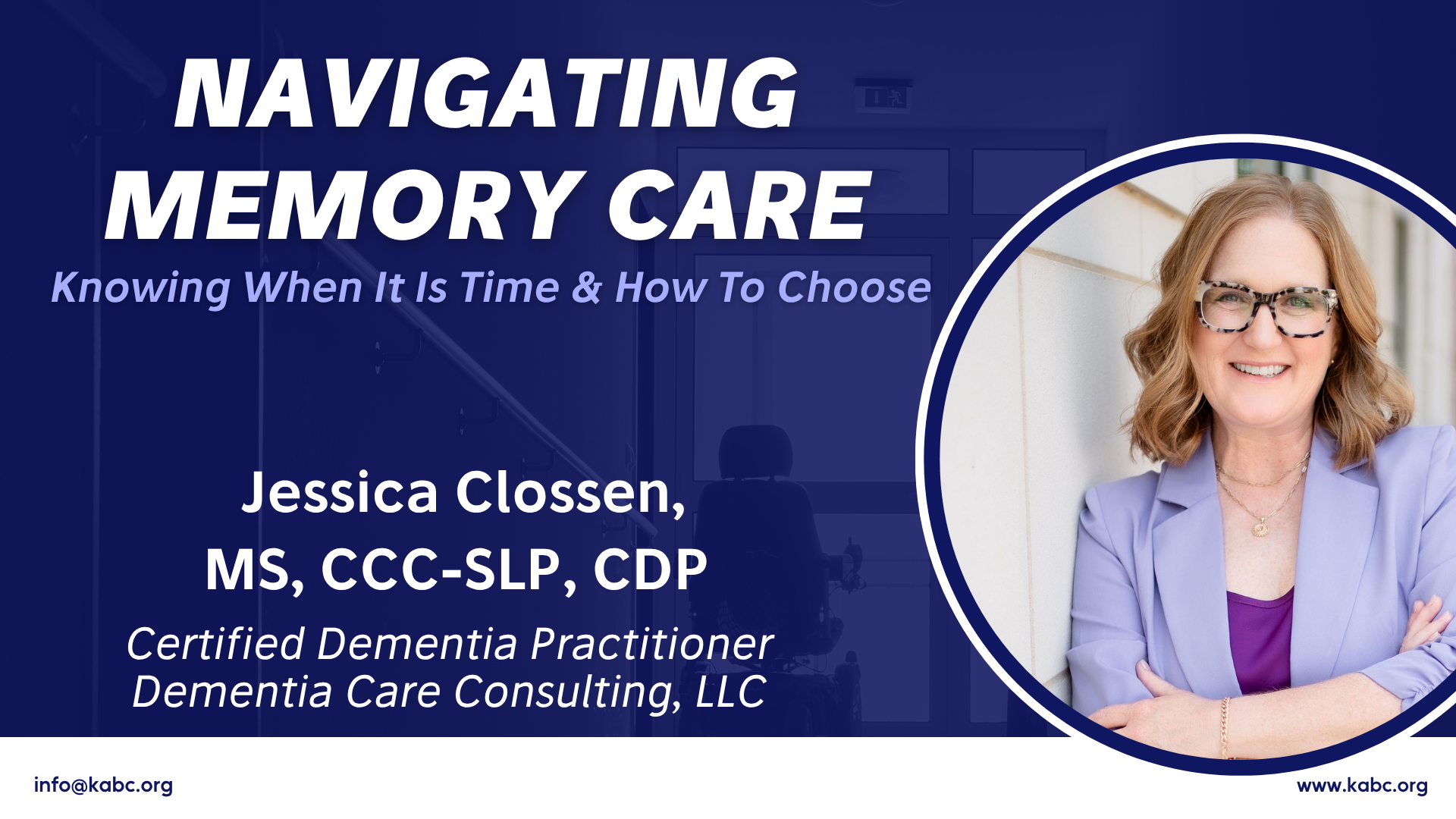
On Thursday, September 10th, KABC hosted our annual caregiver training, with speaker Jessica Clossen, and membership meeting. Over 30 people attended! The meeting began with a brief introduction to KABC by Libby Hastings, Communications and PR coordinator. Afterward, Karen Weber, KABC Board Vice President, led the membership meeting. During the membership and business meeting, Karen Weber (Vice President), Dave Ranney (Secretary), Rachel Stahle, Dustin Baker, and Deborah Merrill were unanimously voted to retain their current board positions. During the caregiver training portion, Navigation Memory Care: Knowing When It Is Time & How To Choose, Jessica Clossen discussed important tips for navigating memory care, including: The hidden cost of waiting too long and caregiver burnout Defining memory care Memory care transition guidance What to look for in a memory care setting Staffing and training Culture and activities Dining and daily routines We are so incredibly thankful to Jessica for sharing her time and expertize with our attendees. If you'd like to connect with Jessica Clossen, email her at jclossen@dementia-care-consulting.com or call 913-585-5178 . To view the recording of our 2026 caregiver training and membership meeting, please visit our YouTube page here. A copy of the presentation slides is available here .

Kansas has announced that it is exiting the Money Follows the Person (MFP) program, citing a drastic reduction in and possible elimination of federal funding. According to the Kansas Department for Aging and Disability Services (KDADS), the state had planned to reinstate the program on July 1 after several years of inactivity. Instead, Kansas is now withdrawing from the program altogether. For many Kansans, this decision represents a significant missed opportunity. The MFP program was created to help states rebalance their long-term services and supports systems by making it easier for people to move from institutional settings, such as nursing facilities, back into homes and communities. The program provided funding for critical transition expenses, including home modifications, furniture, bedding, kitchen supplies, and other necessities that help make community living possible. At its core, MFP recognized a simple truth: most people want to live in their own homes and communities, not institutions. Research consistently shows that older adults overwhelmingly prefer to age in place. In an AARP survey, 75 percent of older adults reported wanting to remain in their homes as they age. Yet many feel they will eventually have no choice but to move into a facility because the supports needed to remain at home are unavailable or unaffordable. Programs like MFP help bridge that gap. When people remain in nursing facilities despite being able to live safely in the community, there are consequences, not only for the individual, but for the state as a whole. First, individuals lose autonomy and control over their daily lives. Living in the community allows people to decide when they wake up, what they eat, who they spend time with, and how they participate in their neighborhoods. These choices may seem small, but they are fundamental to dignity and quality of life. Second, unnecessary institutionalization can contribute to social isolation. People living in their own homes can remain connected to friends, family, faith communities, volunteer opportunities, and local activities. Community integration promotes both physical and emotional well-being. Third, keeping people in nursing facilities when they could thrive in the community often comes at a higher cost to the Medicaid system. Home and community-based services are frequently less expensive than institutional care while also aligning with what most people prefer. Helping individuals remain in the least restrictive setting can benefit both taxpayers and the people receiving services. Finally, programs like MFP help remove barriers that prevent people from exercising their right to choose where they receive care. Transitioning from a nursing facility to the community is often not as simple as opening the front door and leaving. Many individuals need assistance securing housing, obtaining household items, modifying their homes for accessibility, or coordinating services. Without dedicated funding and support, these barriers can become insurmountable. Kansas has made progress over the years in expanding home and community-based services, but significant challenges remain. Housing shortages, workforce shortages among direct care workers, and waiting lists for services continue to make community living difficult for many people. The loss of Money Follows the Person means one fewer tool available to help Kansans return home.

2026 legislative wrap-up for long-term care advocates in Kansas.

On March 19, 2026, a Washington Post article highlighted a recent Office of Inspector General for the Department of Health and Human Services investigation that brought renewed national attention to a troubling reality inside America’s nursing homes: powerful antipsychotic drugs are being used not as treatment, but as control. The report found that some facilities are misdiagnosing residents with schizophrenia to justify prescribing antipsychotic medications. These drugs are often not approved for people with dementia and carry serious risks, including falls, strokes, and even death. In many cases, these medications are used to manage behaviors that are not dangerous, such as calling out, resisting care, or expressing distress. The result is what advocates have long warned about: the use of chemical restraints to sedate residents for staff convenience. A National Problem Decades in the Making The misuse of antipsychotic drugs in long-term care has been documented for years. In April 2024, KABC highlighted this issue in our advocacy work, noting that hundreds of thousands of nursing home residents nationwide are given antipsychotic medications, often without appropriate clinical justification. These drugs carry an FDA “black box” warning for use in older adults with dementia due to an increased risk of death. Federal efforts over the past decade have aimed to reduce unnecessary use, yet as of early 2026, approximately 17% of long-stay nursing home residents in the United States are still receiving antipsychotic medications. At the same time, recent federal policy discussions in March 2026 have raised concerns among advocates that loosening reporting requirements could reverse progress made in reducing inappropriate use. Kansas Is Not Immune This issue hits close to home. In 2022, the Kansas Legislature’s Senior Care Task Force released a report to the 2023 Legislature identifying the administration of antipsychotic medications and protections against abuse and neglect as critical areas for reform. The Task Force emphasized that these medications could have serious and even fatal consequences for older adults, particularly when used inappropriately. Advocates in Kansas have reported that up to 26% of nursing home residents, and nearly 40% of those with dementia, have been prescribed antipsychotic medications in recent years, despite well-documented risks. While some facilities have made progress, reductions in use have stalled in recent years, raising concerns that systemic issues remain unresolved. Why It Happens At its core, the misuse of antipsychotic drugs is often a symptom of deeper systemic problems, many of which have been exacerbated since the COVID-19 pandemic. Experts and investigators point to: Chronic understaffing, intensified since 2020 Lack of training in dementia care Pressure to manage behaviors quickly Lack of person-centered practices in care Gaps in oversight and accountability Non-drug approaches, like personalized care, meaningful activities, and addressing unmet needs, are widely recognized as best practice. But they require time, staffing, and resources that many facilities continue to lack in 2026. When those supports are missing, medication restraint becomes the default. What Proper Care Should Look Like Clinical guidance has long been clear, and yet remains unchanged in 2026. Antipsychotic medications should be a last resort, used only when: Non-drug interventions have failed The resident poses a risk to themselves or others The benefits outweigh the serious risks Even then, they should be used cautiously, closely monitored, and regularly reevaluated. The Path Forward for Kansas Kansas has an opportunity, and an obligation, to act. Building on the 2022 Senior Care Task Force recommendations, advocates continue in 2025–2026 to call for: Expanded access to geriatric mental health specialists Stronger oversight and enforcement Improved training in dementia and person-centered care Greater transparency for residents and families Meaningful solutions to the ongoing staffing crisis At its heart, this is about dignity. Older adults in Kansas adult care homes deserve care that respects their humanity, not treatment that silences it.

Kansas Advocates for Better Care testified on FE waiver funding and supported bills on decision-making, dementia training, and memory care standards.

In 2025, KABC marked a major milestone: 50 years of advocating for the safety, dignity, and rights of older Kansans. Our newly released 2025 Impact Report reflects a year of meaningful progress, powerful advocacy, and deep community connection. This past year, KABC assisted hundreds of residents and families through direct advocacy, strengthened long-term care oversight through legislative work, and expanded access to information with the launch of a statewide senior resource directory in partnership with KDADS. We also amplified resident voices through media coverage, testified before legislative committees, and successfully countered efforts that would have weakened long-term care safety standards. As part of our 50th anniversary, we brought advocacy into the community with new events like Revving Up Joy, a classic car show connecting residents and neighbors, and a public screening of No Country for Old People , sparking critical conversations about the realities of long-term care in America. None of this work is possible without the support of our donors, partners, board members, and volunteers. Your commitment fuels our mission and helps ensure older Kansans are seen, heard, and protected. Read our full 2025 Impact Report here .
Updates from the January 23rd Bob Bethell Joint Committee.

KABC’s January 2026 legislative update covers the compressed Kansas session, budget cuts, Medicaid risks, and priorities to protect older Kansans.
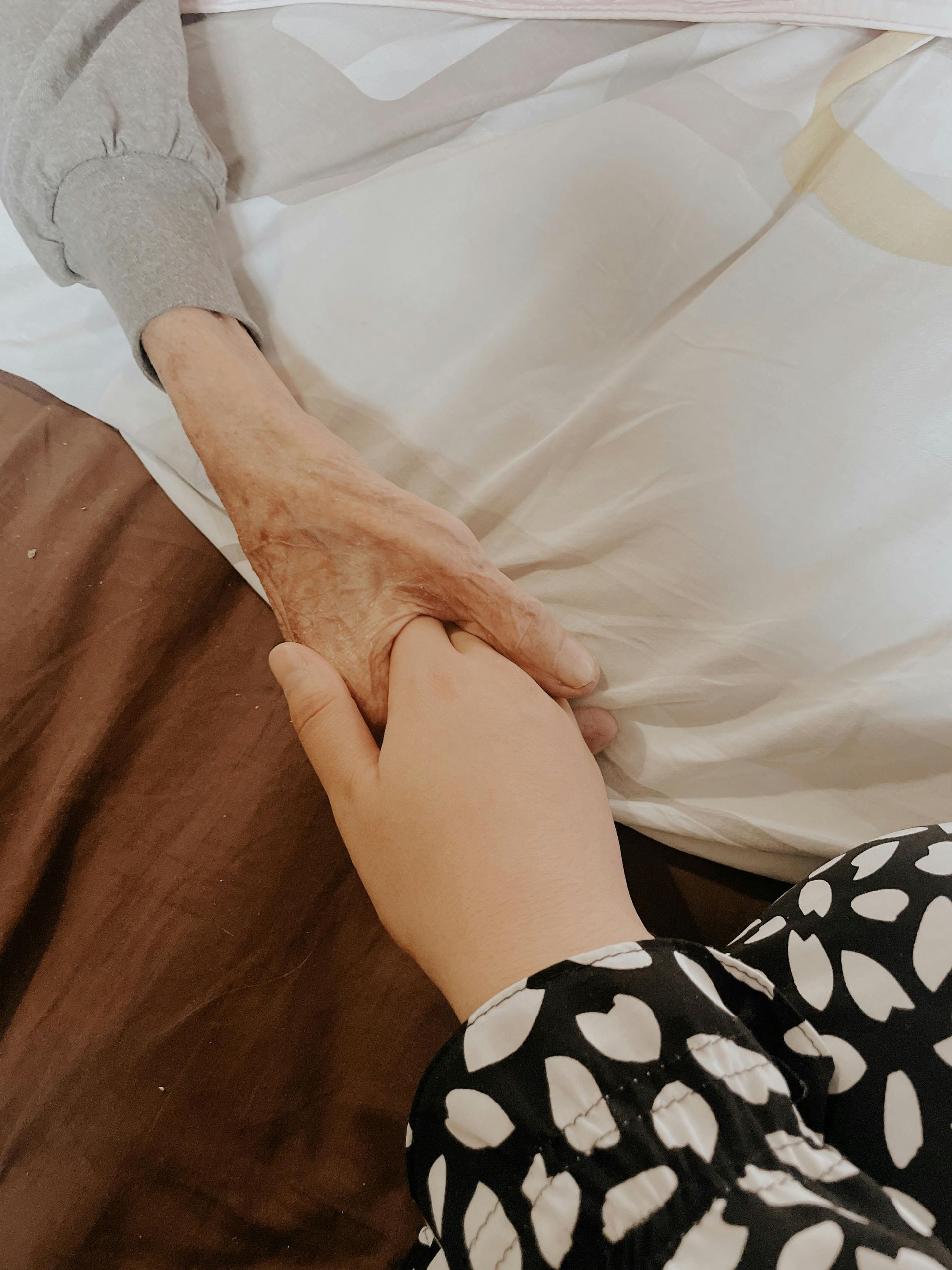
Kansas families face a fragmented dementia care system. Learn the policy gaps and solutions to support older adults and caregivers.