



Fixing a Fragmented System
Libby Hastings • December 29, 2025
Fixing a Fragmented System: Dementia Care and Support in Kansas
While services exist for older adults with dementia or cognitive impairments and their caregivers, access is fractured, spread across agencies, and contracted to various partners. Funding streams and eligibility rules are not aligned. Families are forced to self-navigate a complex system without a single professional looking out for the older person’s best interest, especially at a time when they are least able to do so. This is particularly true in rural and frontier counties where provider choice is limited, and family caregivers carry most of the burden.
There are existing policies and structural issues that unintentionally limit access to timely, effective, and person-centered support for individuals with dementia or cognitive impairment. Several structural issues limit access: a) State funding and investment prioritize institutional care over community-based services. b) Kansas’s Medicaid eligibility and service authorization processes are fragmented, slow, and rigid, which makes our system difficult to navigate. c) Workforce policies fail to address shortages, particularly in rural and frontier areas, resulting in approved services that, at times, cannot be delivered. These policies were never designed to restrict access, but the cumulative effect does exactly that.
Effective models for supporting individuals with dementia and their caregivers share some common traits: a) Strong community partnerships between Area Agencies on Aging, local providers, and advocacy organizations. b) Care coordination/case management service models that offer a single, trusted professional or point of contact. c) Flexible use of funds to care coordination, that support respite, and resource education. Programs succeed better when they reduce complexity.
The most urgent gaps in services and support are: a) Timely access to services before a hospital stay & discharge. b) Reliable caregiver support, including respite, education, and training. c) Capable direct care workers, particularly in rural communities. Too often, assistance arrives only after families are overwhelmed or burnt out.
Two steps would make an immediate difference in strengthening dementia-capable systems: a) Implement or re-invest in community care coordination to perhaps span across agencies and various funding sources. b) Strengthen the community-based direct care workforce through targeted reimbursement increases tied to community-based and/or dementia-specific training. Both are achievable within existing structures.
Three state-level priorities or investments that would most improve outcomes for older adults living with dementia or other cognitive impairments in Kansas include: rebalancing long-term care funding or investment to better support community-based services, holding systems accountable for outcomes, especially where public dollars are invested and aligning policy, funding, and accountability around what families actually need to succeed at home along with their older family member.
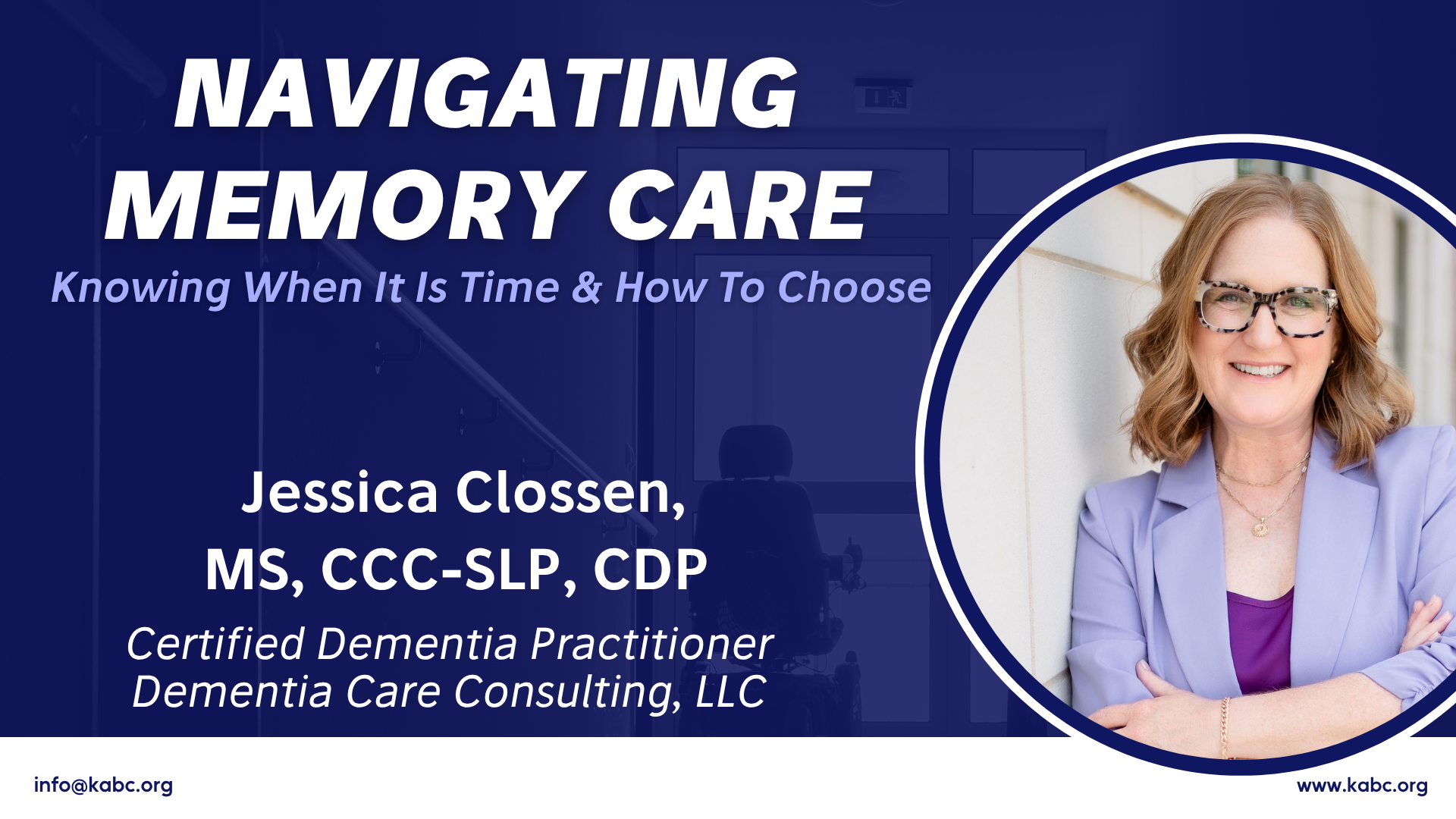
On Thursday, September 10th, KABC hosted our annual caregiver training, with speaker Jessica Clossen, and membership meeting. Over 30 people attended! The meeting began with a brief introduction to KABC by Libby Hastings, Communications and PR coordinator. Afterward, Karen Weber, KABC Board Vice President, led the membership meeting. During the membership and business meeting, Karen Weber (Vice President), Dave Ranney (Secretary), Rachel Stahle, Dustin Baker, and Deborah Merrill were unanimously voted to retain their current board positions. During the caregiver training portion, Navigation Memory Care: Knowing When It Is Time & How To Choose, Jessica Clossen discussed important tips for navigating memory care, including: The hidden cost of waiting too long and caregiver burnout Defining memory care Memory care transition guidance What to look for in a memory care setting Staffing and training Culture and activities Dining and daily routines We are so incredibly thankful to Jessica for sharing her time and expertize with our attendees. If you'd like to connect with Jessica Clossen, email her at jclossen@dementia-care-consulting.com or call 913-585-5178 . To view the recording of our 2026 caregiver training and membership meeting, please visit our YouTube page here. A copy of the presentation slides is available here .

Kansas has announced that it is exiting the Money Follows the Person (MFP) program, citing a drastic reduction in and possible elimination of federal funding. According to the Kansas Department for Aging and Disability Services (KDADS), the state had planned to reinstate the program on July 1 after several years of inactivity. Instead, Kansas is now withdrawing from the program altogether. For many Kansans, this decision represents a significant missed opportunity. The MFP program was created to help states rebalance their long-term services and supports systems by making it easier for people to move from institutional settings, such as nursing facilities, back into homes and communities. The program provided funding for critical transition expenses, including home modifications, furniture, bedding, kitchen supplies, and other necessities that help make community living possible. At its core, MFP recognized a simple truth: most people want to live in their own homes and communities, not institutions. Research consistently shows that older adults overwhelmingly prefer to age in place. In an AARP survey, 75 percent of older adults reported wanting to remain in their homes as they age. Yet many feel they will eventually have no choice but to move into a facility because the supports needed to remain at home are unavailable or unaffordable. Programs like MFP help bridge that gap. When people remain in nursing facilities despite being able to live safely in the community, there are consequences, not only for the individual, but for the state as a whole. First, individuals lose autonomy and control over their daily lives. Living in the community allows people to decide when they wake up, what they eat, who they spend time with, and how they participate in their neighborhoods. These choices may seem small, but they are fundamental to dignity and quality of life. Second, unnecessary institutionalization can contribute to social isolation. People living in their own homes can remain connected to friends, family, faith communities, volunteer opportunities, and local activities. Community integration promotes both physical and emotional well-being. Third, keeping people in nursing facilities when they could thrive in the community often comes at a higher cost to the Medicaid system. Home and community-based services are frequently less expensive than institutional care while also aligning with what most people prefer. Helping individuals remain in the least restrictive setting can benefit both taxpayers and the people receiving services. Finally, programs like MFP help remove barriers that prevent people from exercising their right to choose where they receive care. Transitioning from a nursing facility to the community is often not as simple as opening the front door and leaving. Many individuals need assistance securing housing, obtaining household items, modifying their homes for accessibility, or coordinating services. Without dedicated funding and support, these barriers can become insurmountable. Kansas has made progress over the years in expanding home and community-based services, but significant challenges remain. Housing shortages, workforce shortages among direct care workers, and waiting lists for services continue to make community living difficult for many people. The loss of Money Follows the Person means one fewer tool available to help Kansans return home.